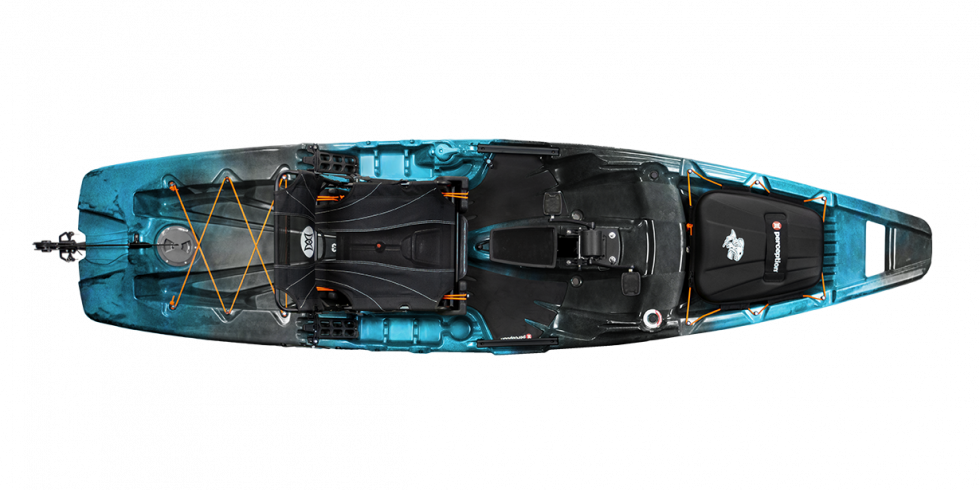
Who knows why we start things. Maybe your parents had a banged up aluminum canoe in the backyard and one day you and your neighborhood buddies dragged it down to the local creek. Perhaps in college you wanted to impress your date by taking her/him...
Kayaking kids should check out these products: Prodigy XS Conduit 9.5 Tribute 10 Tandem Kayaks are another great option for family fun Kids also need PFD's specifically sized for them, clothing that will protect them in the wet environment and a...
Serial number will be found on right side (standing at stern looking forward) of kayak just below the side seam demarcating hull and deck. Click here for more details. Position will vary from boat to boat but is usually within 8-18" forward of stern...
A roof rack, whether factory installed or an aftermarket product, greatly enhances both security and convenience when transporting your kayak. There are many aftermarket accessories that combine with a roof rack to offer even more convenience and...
The following list is an example of what you might take on a typical daytrip: Boat Paddle Personal Flotation Device (PFD) (required) with whistle Neoprene or Nylon Spray Skirt Quick drying clothing suitable for the conditions Bilge Pump Paddle Float...
Although it is unlikely that your kayak will need repair during its lifetime, it is possible that a hull crack or puncture might occur due to extreme impact or contact with a sharp object. If this happens, first contact Perception or your Perecption...
All Perception boats with bulkheads use 2” think Synergy® Foam. ADVANTAGES OF 2” THICK SYNERGY® FOAM: Polyethylene foam is 100% recyclable. Unlike cross-linked foams, the Synergy® foam does not out gas, which results in fewer bubbles in the sealant...
If you think your kayak may have a warranty issue, first be sure that it is in fact eligible for a warranty. To be eligible, your boat must have been purchased new less than three years ago, and from an authorized Perception retailer. Keep in mind...
You may notice some older recreational models include bow foam flotation while the newer models of these boats do not. After a review of flotation in (brand) recreational kayaks and comprehensive testing against the American Boat and Yacht Council...
This "dip" in the hull is common and natural in many touring kayaks. It also occurs with age, as boat hulls tend to wear in the seat area. This area under the seat is no less strong than the rest of the boat, but it is less rigid due to the large,...